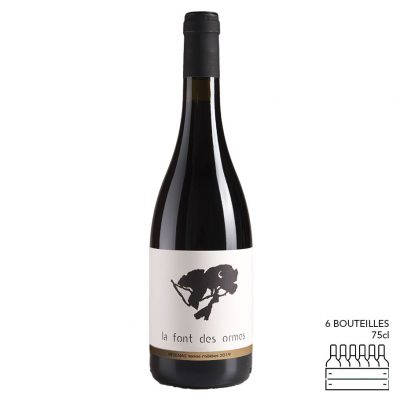
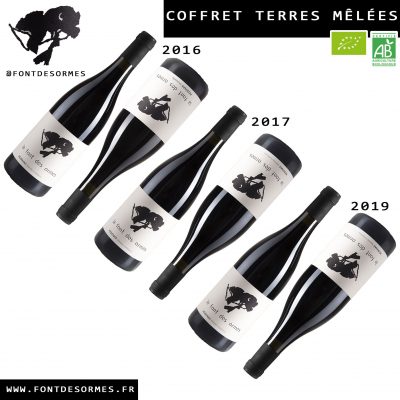
In Caux, in the Pézenas region of Languedoc, the Font des Ormes is undergoing a metamorphosis in an immutable setting, a valley bordered by two basalt flows.
Our ambition: to reflect the elegant and serene energy of the landscape in our organic wines.
Our commitment: the choice of biodynamics to achieve balance with our natural environment, activate soil life, and strengthen our vines.
THE FEELING OF REDISCOVERY
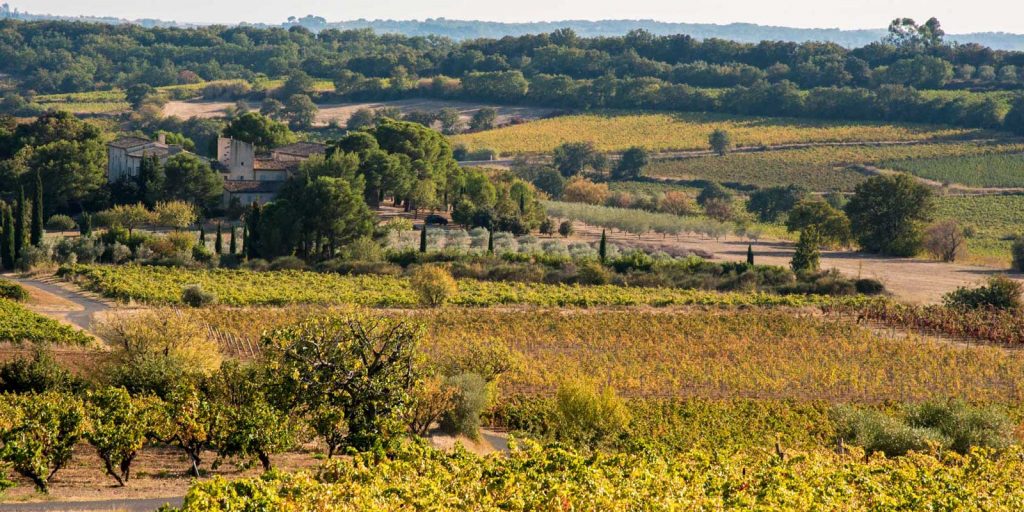
Landing there, in the valley of Sallèles, pushed by a benevolent breeze. Immediately recognizing a childhood scene, a strangely preserved haven. Perhaps even a more distant past, an ancient history, tasting the joy of the Romans who planted the first vines there. Astonished to hear only birdsong, to see unfold a setting of the old regime, before the phylloxera revolution and its deluge of vines, with its serene harmony of fields, olive groves, oak groves, almond trees in bloom. As if, in this long and gentle conch offered to the sky and the caress of the winds but remaining apart from modernity, nostalgia had no place.
Feeling despite everything that it was not enough to position oneself there as guardians of the temple to fully assume its heritage and ensure its sustainability.
DECIPHERING THE LANDSCAPE
Walk. Simply follow the paths that wind through the mosaic of plots, hugging the slope. Venture onto the Causse Noir, into the kaleidoscope drawn by the light in the undergrowth of holm oaks, the ephemeral dance of rockroses and grasses. Soak up and understand. Patiently learn about the mineral imbroglio. The quartz carried by the rivers of the Montagne Noire, the silica of the Cévennes, polished by the ebb and flow of the Miocene sea to encrust, in the carpet of blue marl and giant oyster fossils, this “dragee molasse” nicely named by a geologist from another century. See the lava flow from the ancient volcano in the valleys, then the very slow erosion do its work until the relief is reversed into an oblong crucible.
THE AWAKENING OF THE EARTH
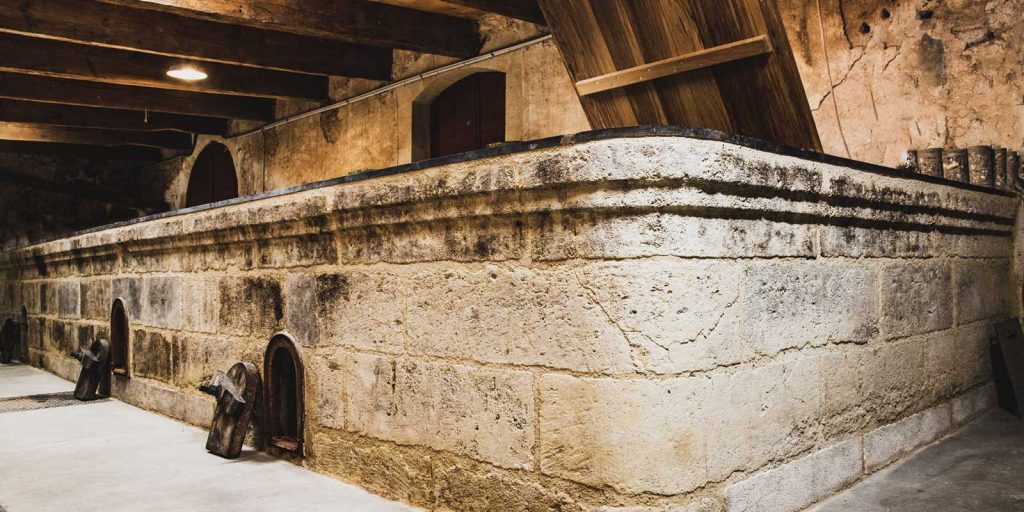
With the help of architect Ariel Balmassière, re-plaster the dilapidated walls of the medieval hamlet with lime, restore the timber frames and tiled roofs, recreate the subtle monochrome of the woodwork and fabrics. Revive the vineyard masets. Redesign the gardens. See once again the chiseled lacework of the tall pines pulsating against the ochre of the facades. From there, feel the subterranean call of the torpid living. Then invite Lydia and Claude Bourguignon, take them to the hillside, to “Mexico,” an ancestral plot of Carignan turbaned with irises. Be enchanted with them by the rare marriage of limestone and basalt, the promising pink of the roots. Scrupulously follow their precepts as soil healers. Encourage rebirth.
WINE, A DESIRE TO SHARE
Conceive wine as a tribute. A song. Imagine this landscape like a score discovered in a museum of early music. Entrust it to young performers so that they can draw inspiration from it for a fresh version, full of energy, fluidity, and new vibrations. Where Mourvèdre would offer the tension of a basso continuo, Grenache a pleasant roundness, Carignan the familiar exoticism of its spices. Without ever forcing the point, nor giving in to the easy seduction of candied fruits. Rather, accept a form of austerity, a whispered elegance, claiming the penetrating modesty of a Languedoc that demands patience and is long-lasting. Like a loyal friendship.